Ostrava, Czechia
Nové Bazaly
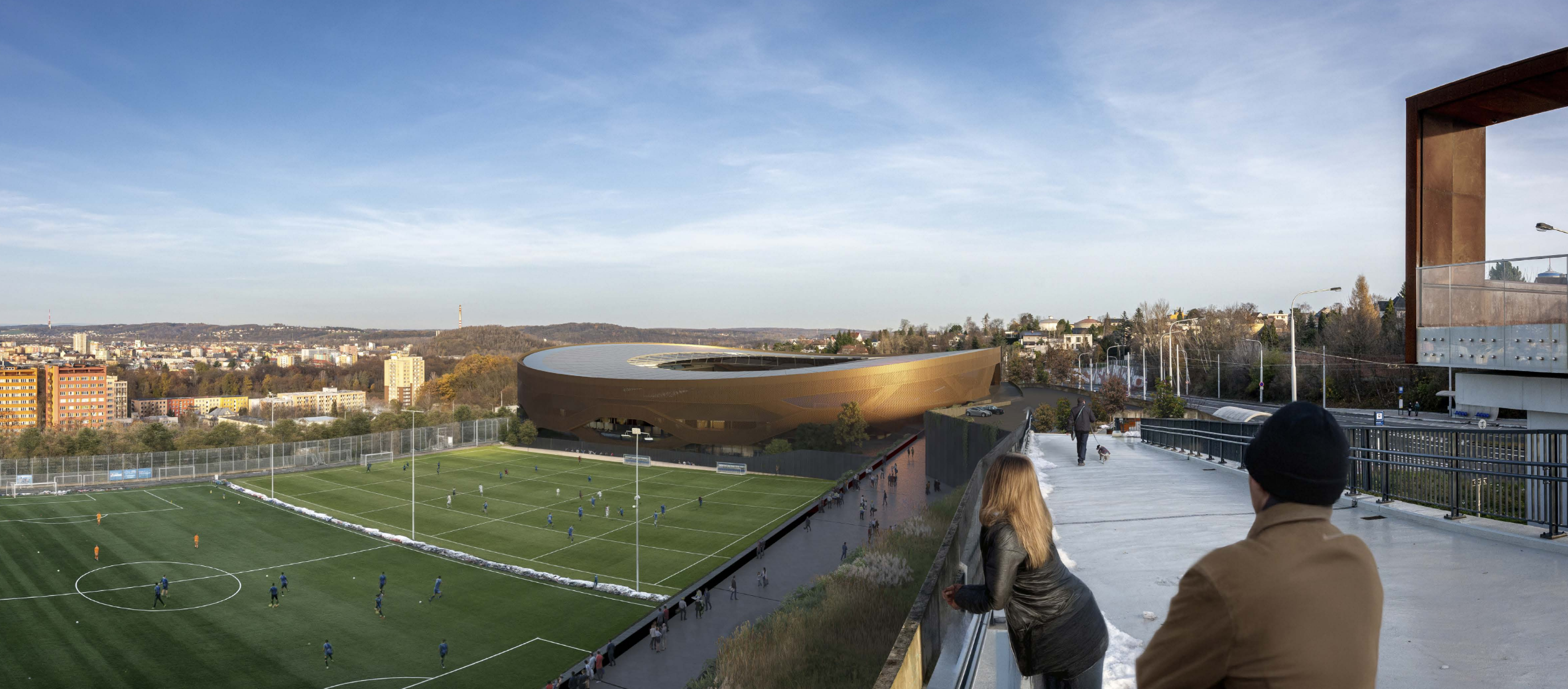
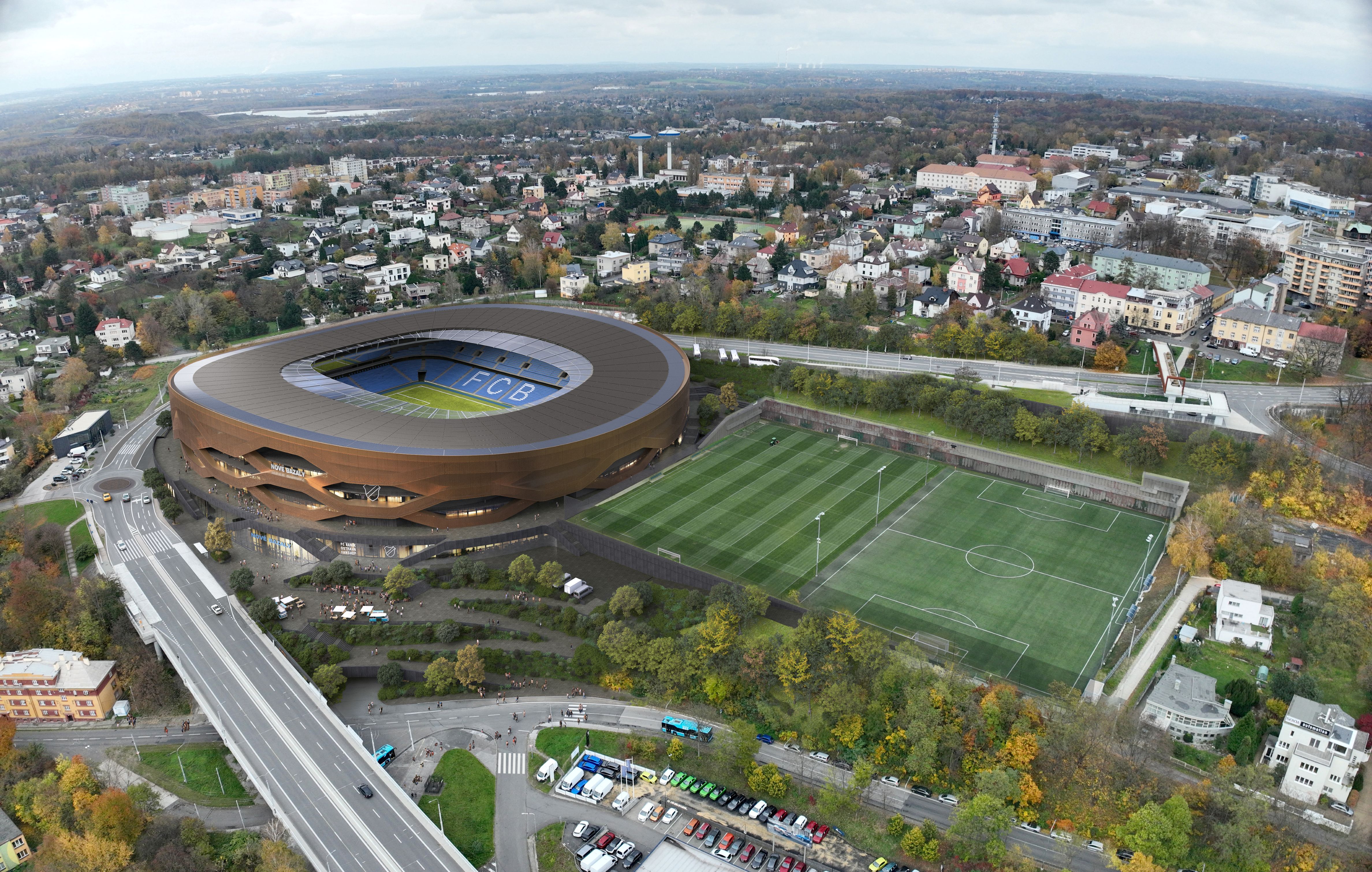
Evolve provided Structural Engineering design services for the competition winning design led by L35 Arquitectos for the Nové Bazaly stadium in Ostrava. Nove Bazaly has been designed as a modern stadium, up to UEFA Category 4 standards, paying special attention to solving the urban integration and transport challenges, while delivering an inspirational image that links to the local heritage and portrays an iconic and brutally honest image. The 20.188 net-capacity bowl is designed to create a vibrant atmosphere - an energetic melting pot that fully embraces the pitch across two tiers, bringing fans as close as possible to the action. Nestled within the site’s boundaries, the design maximizes generous internal and external circulation while preserving the existing training fields.

Client: City of Ostrava
Location: Ostrava, Czechia
Sector: Sports, Culture, Leisure
Architect: L35 Arquitectos
Structural Engineers: Evolve
Geotechnical Engineer: LANGAN
Image Credit: L35 Arquitectos
The Challenge
The project presents several challenges. The main ones are driven by its constraints and the ground conditions. The ground profile presents quarry waste and eluvium/slope deposits over depths between 16-30m below ground, additionally there are former mining corridors at depth within the ground and an air raid shelter. The stadium is also on a hill side with 25m vertical difference in level between East and West side posing challenges from a soil retention perspective and cross-site circulation. The site is furthermore tightly constrained by the surrounding highway, providing limited footprint beyond the stadium building to develop engaging public realm designs.
The Solution
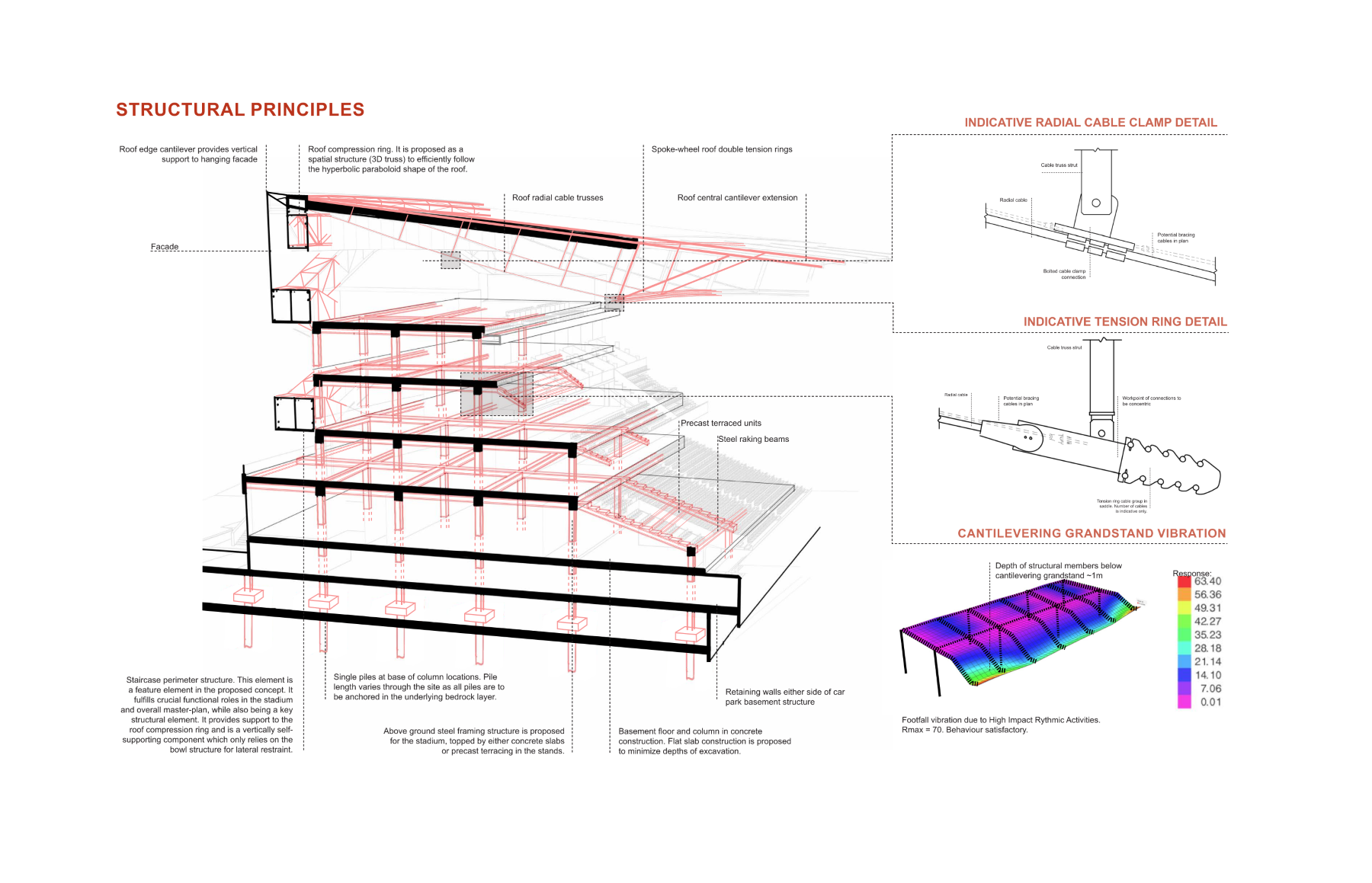
The proposed development requires considerable reworking of the existing stadium site. This includes large excavations to form the required car parking on the west side as well as into soil slopes to form the eastern stand. Since competition stage, in collaboration with LANGAN, we developed logical preliminary phased construction strategies to demonstrate viability. In terms of foundations, the proposed solution for the stadium structure is to use piled foundations socketed into the bedrock by at least 5m to distribute loads to competent (stronger) Carboniferous Bedrock. Due to the required depth, efforts have been made to minimise the demand and foundation level, which has informed the roof solution and material choice of the bowl structure framing (steel).
The proposed roof system is in fact a saddle-shaped modern and lightweight spoke wheel system with a double tension ring at centre and compression ring at perimeter. The movement of fans is then inscribed into the façade and forms its essence. The perimeter staircase structure is in fact perceived as the building envelope and is the team’s response to the challenge of connecting between the changing site levels and the circulation of visitors around and through the stadium. This element brings together, within a single system, crucial elements of a stadium - such as the vertical circulation of the public, the structure supporting the roof, and the visual identity of the façade.