London, UK
Stansted Domestic Reclaim Building
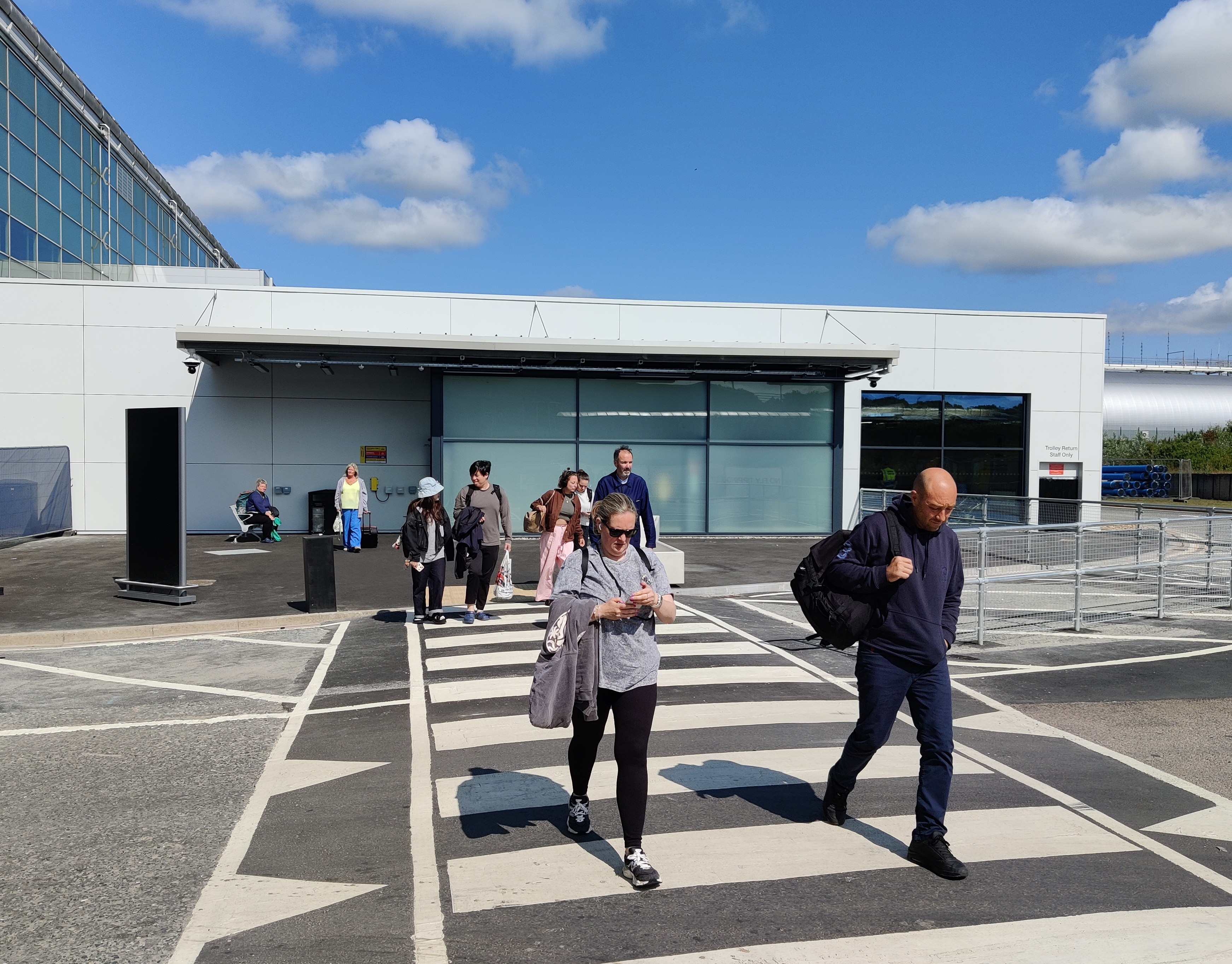
The new Domestic Baggage Reclaim Facility at Stansted Airport forms part of the wider terminal expansion programme aimed at improving the passenger arrival experience. Previously, domestic passengers accessed the baggage reclaim area within the main terminal via a sky link from Satellite 2. After collecting their luggage, passengers exited the terminal via a perimeter corridor before walking along the forecourt to reach the main arrivals facilities.
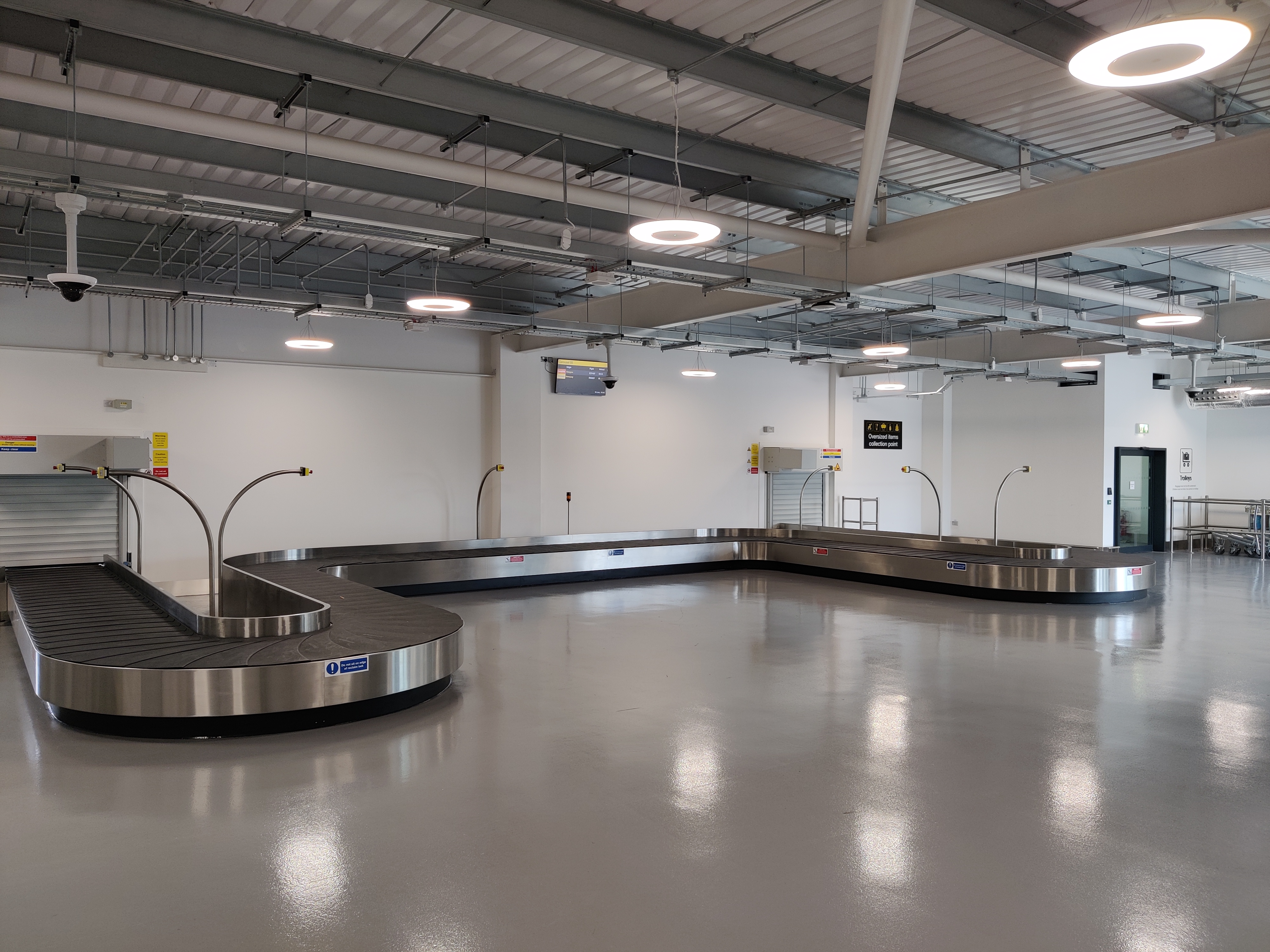
The new facility relocates domestic baggage reclaim to a dedicated building located to the east of the terminal. Passengers are transported from their aircraft to the facility by coach via the existing airside road network used for coached arrivals. The new building includes a baggage reclaim carousel providing approximately 36 m of presentation length, along with associated passenger circulation and support spaces. By creating a purpose-built reclaim facility, the project improves operational efficiency while supporting the airport’s future growth and increasing domestic passenger capacity.

Client: Manchester Airport Group / Fado Contractors
Location: London, UK
Sector: Transport
Architect: Orbit Architects
Structural Engineers: Evolve
MEP Engineer: EM Tecnica
Contractor: Fado
The Challenge
The project presented a number of technical and programme-related challenges. A key driver was the fast-track delivery programme required to support the airport’s expansion timeline and ensure operational readiness for new domestic arrivals.
Site constraints also significantly influenced the design. The building location was restricted by the existing Gorefield Roundabout and surrounding infrastructure, limiting the available footprint. In addition, as part of the statutory planning strategy, the building footprint was required to remain below 500 m² so that the development could proceed under permitted development rights.
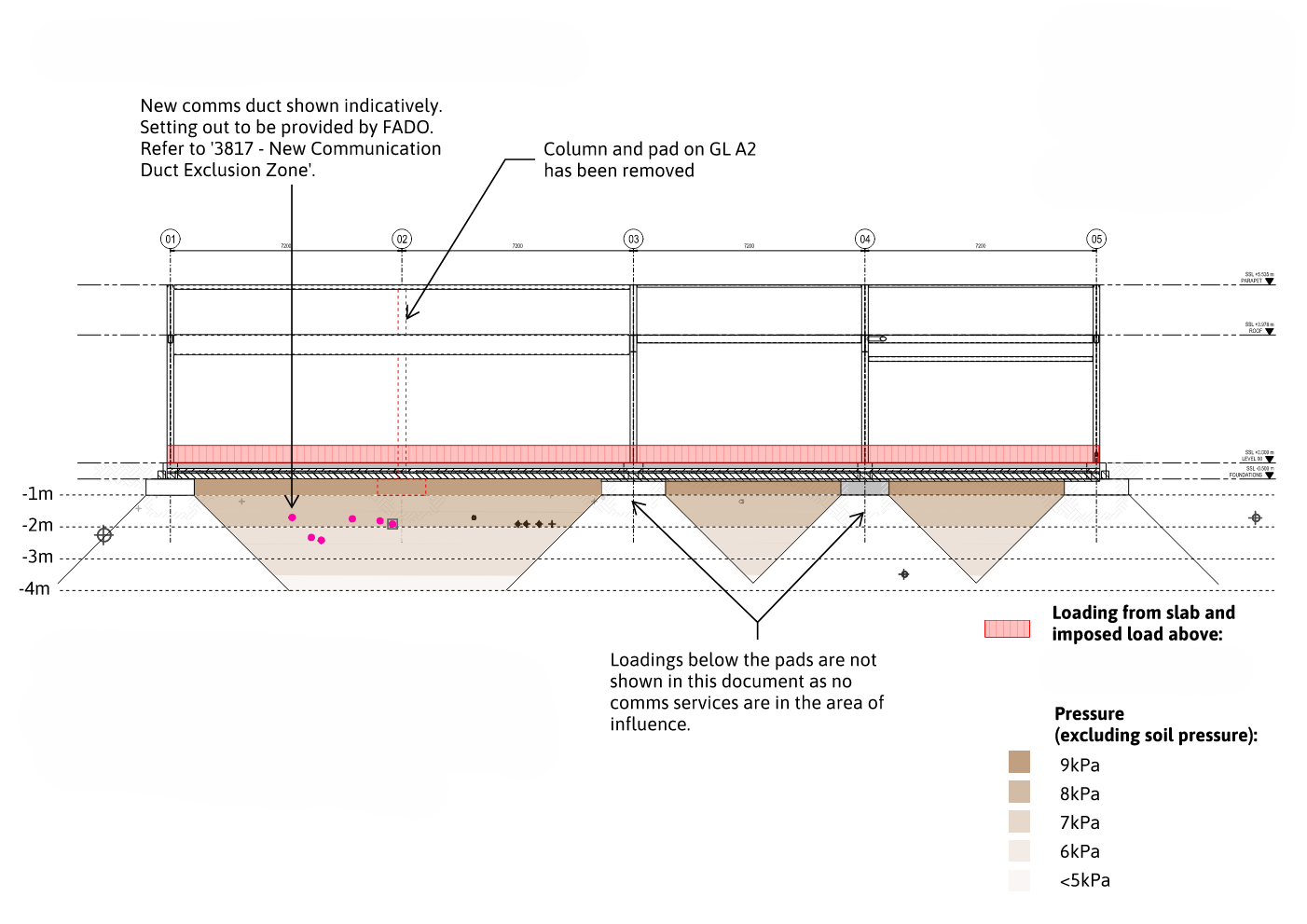
Further complexity arose from extensive buried utilities crossing the proposed building footprint. These included critical infrastructure such as communications ducts that required protection from structural loading. The design team needed to demonstrate that the proposed structural solution would have negligible impact on these services while coordinating closely with Manchester Airport Group and other stakeholders to verify and agree acceptable engineering solutions.
The Solution
The structural design evolved through close coordination with the client and other disciplines to respond to the constraints identified during the design process. Adjustments to the building layout included slight plan relocations of the structure and revised column positions to avoid critical utility routes. One column originally included in the conceptual design was removed where it conflicted with communications ducts, with loads redistributed to adjacent columns through a revised roof beam design.
External canopy structures also required careful coordination with existing utilities. On the airside elevation, a single-column canopy supported on an eccentric reinforced concrete pad was adopted to minimise impacts on underlying services. On the landside elevation, where constraints were less restrictive, a more conventional two-column arrangement was retained to reduce steel tonnage and improve the overall carbon efficiency of the structure.
Although the structure itself was relatively straightforward, the project’s success relied on the team’s ability to respond rapidly to evolving site constraints. Through proactive collaboration and efficient design coordination, the team delivered the facility within a constrained programme, enabling the new domestic arrivals reclaim building to open in record time.
.jpg)

%202.jpg)
